
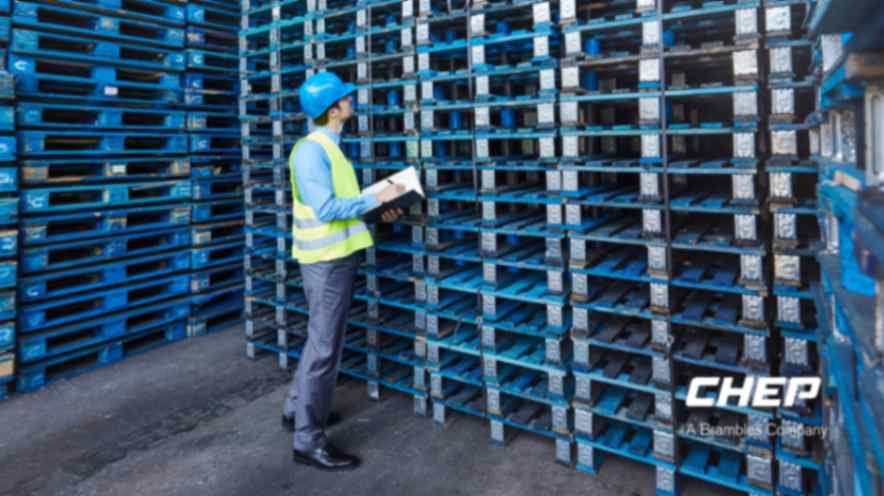
PPWR reshapes pallet management across European supply chains
The provisions of the European Union’s Packaging and Packaging Waste Regulation (PPWR) have applied since 12 August 2026. The new requirements place greater emphasis on how businesses manage transport packaging, including pallets, with a focus on their reuse, recovery, repair and the availability of information about their circulation.
For years, pallets have primarily been viewed as an operational asset, with availability and cost considered key to ensuring the efficient movement of goods. The PPWR places greater attention on the entire lifecycle of these assets. For businesses, this means assessing how load carriers operate across the supply chain and who is responsible for each stage of their circulation.
Open pallet pools mean distributed responsibility
When pallets are owned by individual companies or operate within exchange systems, they move between manufacturers, logistics operators, distributors, retailers and other supply chain participants. As a result, information about their use may be held across different systems and by different partners, while responsibility for the continued circulation of the pallet may be distributed among multiple parties.
“In open circulation systems, responsibility for the recovery, repair, reuse and documentation of load carrier movements is shared among many supply chain participants. In practice, this creates additional work for users related to coordinating partners, collecting and reconciling data, organising recovery and overseeing repairs. These additional operations can have a significant impact on the cost of managing pallets. From the perspective of the new regulatory requirements, the ability to demonstrate what actually happens to a pallet throughout its period of use is therefore becoming increasingly important,” says Jan Krakowski, Sustainability & Asset Productivity Manager, CHEP Poland, Central Europe and the Baltic States.
The PPWR therefore also provides an opportunity for businesses to review the pallet management model itself – including whether it enables pallets to be reused at the required scale and provides access to the information needed to manage circulation and reporting.
Pooling brings greater structure to pallet circulation
An alternative to open circulation is a managed model based on sharing and reuse. In the CHEP system, customers use pallets and containers to transport their products, while CHEP manages the subsequent circulation of the assets, including collection, inspection, repair and redistribution to users.
This enables businesses to use established closed-loop infrastructure without having to organise all the processes required to keep pallets in circulation themselves.
“In the new regulatory environment, simply having a pallet available is no longer enough. In a pooling model, responsibility for managing the circulation of load carriers lies with the system operator rather than being distributed among multiple supply chain participants. Compared with an open model, this reduces the additional workload for customers because these processes are carried out within a managed system. It helps to structure the process and facilitates access to information about what happens to the pallet at successive stages of its use,” explains Jan Krakowski.
The introduction of the PPWR provides businesses with an opportunity to assess whether their current pallet model meets the new requirements relating to the reuse, recovery and documentation of transport packaging.
CHEP supports customers in this area through a managed network for sharing and reusing pallets and containers, together with infrastructure that enables their collection, inspection, repair and reintroduction into circulation.
About CHEP
CHEP is a global leader in supply chain solutions. Working with manufacturers, retailers and logistics partners, CHEP promotes smart and sustainable movement of goods in more than 60 countries.
Through a network based on the sharing, servicing and reuse of pooled pallets, crates and containers, CHEP helps businesses optimise their supply chains to reduce costs and minimise their environmental impact.
CHEP combines its leading position in the circular economy – helping address emissions, waste and single-use packaging – with a focus on resilience, using data analysis, the scale of its network and collaboration to build supply networks prepared for the future.
Trusted by many of the world’s leading brands for its operational excellence, CHEP primarily serves customers in the fast-moving consumer goods sector, including dry goods, groceries, household products, personal care products, fresh produce and beverages, as well as customers in the retail, automotive and manufacturing sectors.
As part of the Brambles Group, CHEP manages approximately 347 million pallets and containers through a network of more than 750 service centres, employing around 11,000 people worldwide, with its largest operations in North America and Europe.
For more information about CHEP, visit www.chep.com.

