
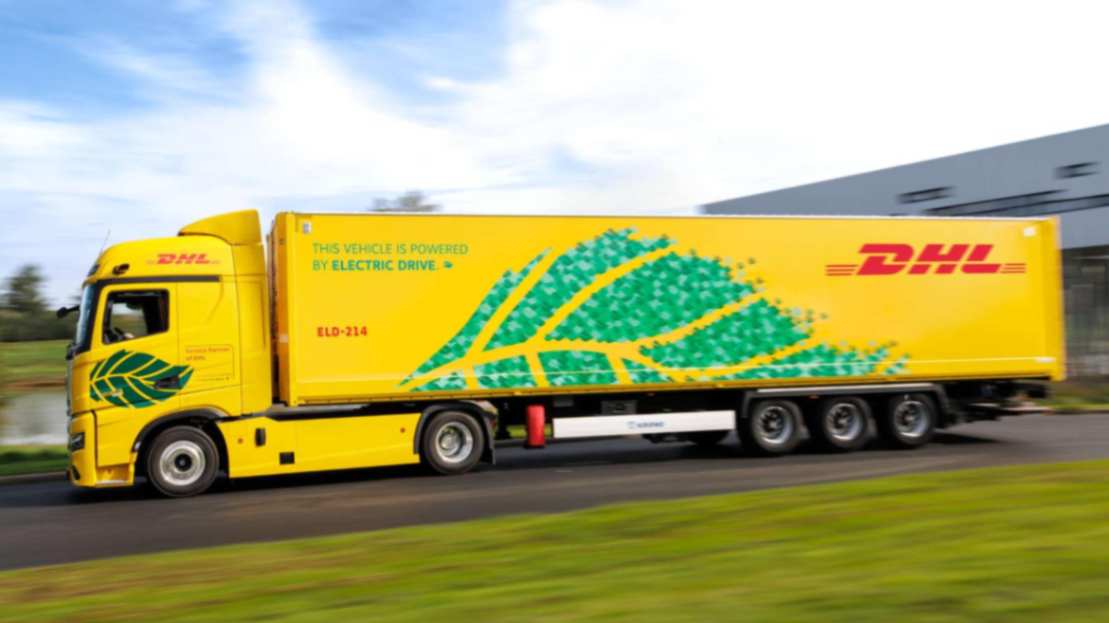
DHL Freight Deploys First Europe-Built SuperPanther eTopas 600 in the Netherlands
DHL Freight has introduced the first Europe-built SuperPanther eTopas 600 into its Dutch transport network, marking the transition of the battery-electric heavy-duty truck from real-world testing to regular commercial operations.
The vehicle has been operating since September 2026, handling domestic freight movements across the Netherlands and cross-border services to Belgium. With a range of up to 500 kilometres on a single charge, the eTopas 600 is designed for medium-haul transport and is currently covering approximately 2,000 kilometres per week.
Rather than being restricted to a dedicated shuttle route or a single terminal, the truck is deployed flexibly across different routes within DHL Freight’s existing network. The operation is providing the company with practical insights into integrating battery-electric heavy-duty vehicles into established logistics structures and international freight operations.
The deployment follows a phased collaboration between DHL Freight and Chinese manufacturer SuperPanther, which began with a memorandum of understanding (MoU) in September 2024.
Following the initial agreement, DHL Freight tested the eTopas 600 under real-world operating conditions in Austria. During a two-week trial in spring 2026, the vehicle covered approximately 1,900 kilometres, allowing the company to assess its performance in day-to-day transport operations.
In July 2026, the first eTopas 600 built in Europe for DHL Freight rolled off the production line. Two months later, the truck entered regular commercial service in the Netherlands.
The companies have also broadened their cooperation beyond electric freight transport. At IAA Transportation in Hanover, DHL Group and SuperPanther signed an MoU on autonomous driving, with plans to test the technology under real-world conditions and explore ways to accelerate its development and practical implementation.
The deployment is intended to generate operational data and experience that can inform the further development of battery-electric heavy-duty vehicle applications.
By gathering insights from regular network operations, DHL Freight aims to assess the operational and economic viability of electric trucks under real-world conditions. The findings are also expected to help refine deployment strategies and identify suitable applications for battery-electric vehicles across its road freight network.
For DHL Freight, the move represents another step towards expanding the commercial use of electric trucks beyond pilot projects and into everyday freight operations.
“Our experience from daily operations has been positive so far. The vehicle meets the requirements of the planned deployment profiles and achieves high productivity within the network. Feedback from drivers has also been very positive, and we are seeing clear interest from customers in transport solutions that reduce greenhouse gas emissions”, says Arjan van Weelden, Carrier & Sustainability Manager at DHL Freight. “What matters to us is that the vehicle can be integrated reliably and flexibly into day-to-day operations. We also share the insights gained with the manufacturer, helping to support the practical development of future vehicle generations.”
“Our customers are looking for practical ways to reduce greenhouse gas emissions from their transport operations”, says Heidi van Eldik, CEO DHL Freight Netherlands & Belgium. “That is why it is not enough for the technology simply to be available; it must also prove itself in day-to-day commercial operations. With the SuperPanther eTopas 600, we are demonstrating how a battery-electric heavy-duty truck can be deployed flexibly across a transport network. The experience gained from regular operations will provide an important basis for integrating solutions of this kind more broadly into our transport networks in the future. Building on this experience, we plan to add around 40 electric trucks to our fleet over the coming months.”
DHL Freight currently operates around 1,700 vehicles with reduced emissions and is testing a range of vehicle types and powertrain technologies as part of its broader approach to reducing the environmental impact of road transport.
The introduction of the SuperPanther eTopas 600 forms part of these efforts and supports DHL Group’s target of achieving net-zero emissions in logistics by 2050.
As the truck continues operating across domestic and international routes, its performance is expected to provide further evidence of how battery-electric heavy-duty vehicles can be integrated into commercial freight networks.

