
Kuehne+Nagel and CATL Partner to Accelerate Battery Logistics and Fleet Electrification
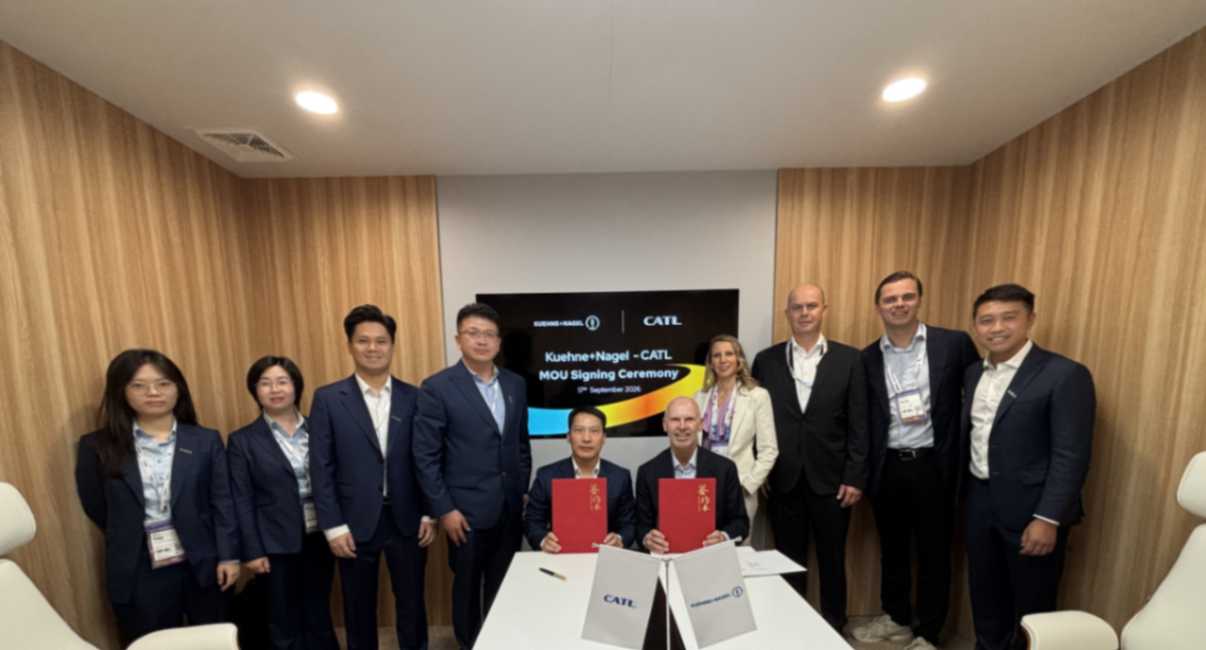
Kuehne+Nagel and Contemporary Amperex Technology Co., Limited (CATL) have signed a Memorandum of Understanding (MoU) to strengthen cooperation in battery logistics, transport electrification and emissions reduction.
The strategic partnership will initially focus on electrifying CATL’s transport operations in Europe and launching a battery-swapping pilot for heavy-duty trucks in China. The pilot, provided by Qiji, is scheduled to launch in 2026.
The collaboration will also explore opportunities in battery recycling, aftersales support, energy storage and charging infrastructure for logistics sites. These initiatives are intended to support both companies’ ambitions to reduce Scope 3 emissions across their logistics and transportation value chains.
“As global leaders in our respective industries, CATL and Kuehne+Nagel share a commitment to accelerating the energy transition and achieving a net-zero emissions future,” said Akin Li, Executive President of CATL Overseas Business. “Our elevated partnership will not only contribute to both parties’ sustainability targets, but also help advance a greener future.”
“Battery-electric vehicles are essential to decarbonising road freight,” said Søren Schmidt, Executive Vice President Road Logistics at Kuehne+Nagel. “Accelerating the transition requires solutions that are both high-performing and operationally viable. By combining CATL’s battery expertise with our logistics capabilities, we can advance initiatives that help reduce our own emissions and those of our customers.”
The agreement comes amid rising global demand for electric vehicles and energy storage technologies. Demand for electric truck batteries increased by more than 75% in 2024, while battery manufacturing capacity continues to grow through the expansion of gigafactories worldwide.
By combining their expertise in logistics and battery technology, Kuehne+Nagel and CATL aim to advance more sustainable transport solutions and support the transition towards lower-emission supply chains.

