
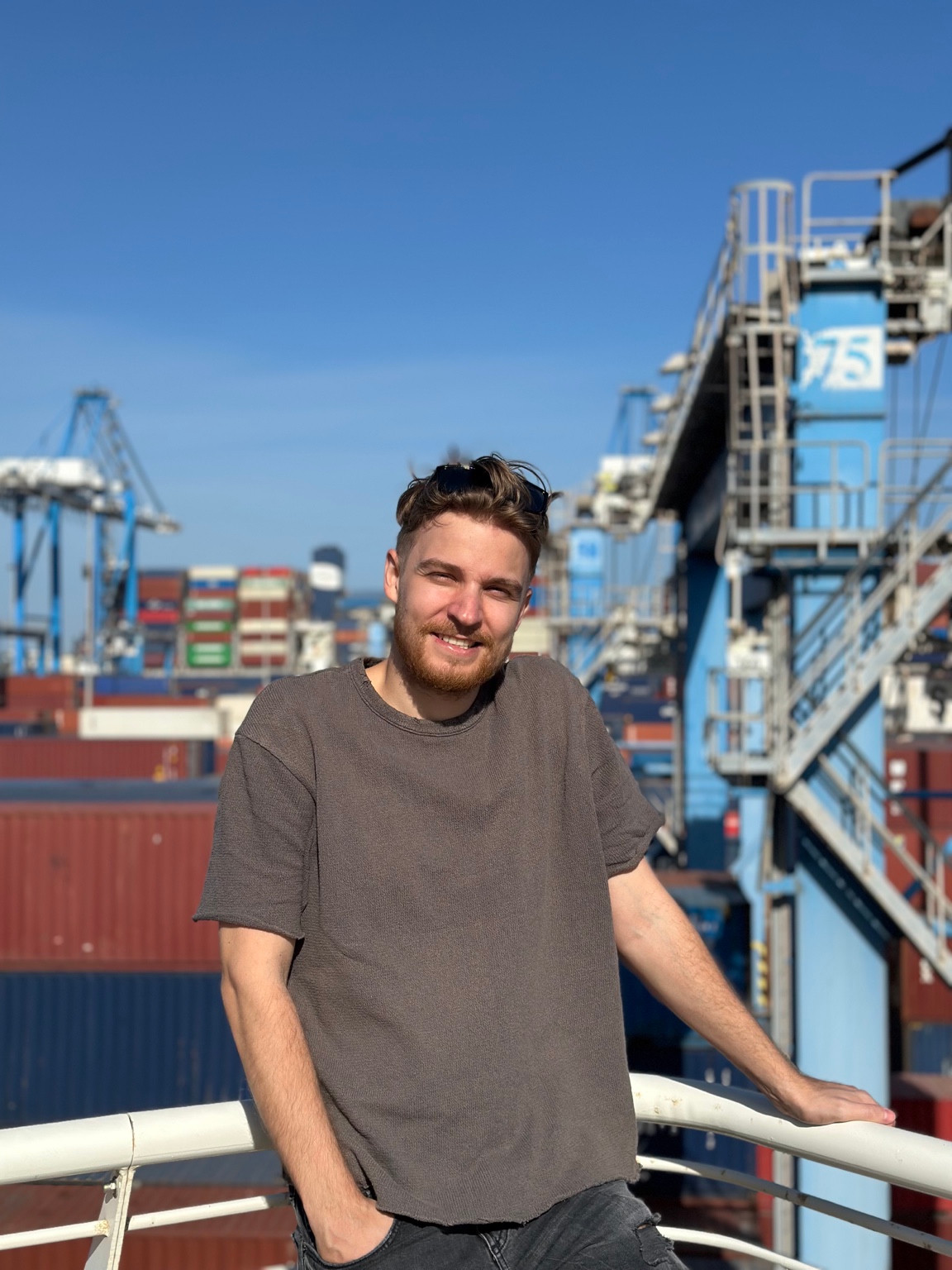
Inside West Matterhorn: CEO Nikita Shevchenko on Vehicle Logistics, Risk and Growth
What inspired you to establish West Matterhorn, and what gap in the international vehicle logistics market did you originally set out to address?
Logistics itself inspired me: its pace, the variety of the work and the difficult problems it presents. It is a field in which you keep learning. As your experience grows, you begin to see the industry’s problems more clearly and want to do something about them.
That was one of my main reasons for starting the company. I wanted to take on complex transport tasks and work on practical solutions to the coordination problems behind them. The motivation was to keep developing while building a business around solving those challenges.
Your published case study describes the movement of two Lamborghini Temerario vehicles from Ambarlı to Almaty via Poti, Baku and Aktau in 13 days; what were the most critical operational considerations in coordinating this multimodal route, and what does it reveal about achieving predictable transit times on complex international corridors?
The foundation was the experience our team had built up before taking on a movement of this complexity. The operational challenge was coordinating the connections between different modes of transport. Each handover creates a risk of missing a detail, losing something or damaging a vehicle.
We prefer to spend more time preparing than resolving avoidable problems once the shipment is moving. That preparation helps us keep the stages we control aligned with the plan.
Predictability still has limits. Weather, storms, border queues, changes to transit rules and other exceptional events can affect stages outside our control. The 13-day result belongs to this completed shipment; it is not a guaranteed transit time for every future movement. Planning means understanding where we can influence timing and where we need to allow for uncertainty.
How do low-clearance supercars, non-running vehicles and high-value cars influence your choice of transport method and handling procedures? Where does the vehicle delivery process most often break down, and what can be done to fix it?
Vehicle type and condition change both the transport plan and the client’s priorities. With high-value sports cars, preserving condition is central: even compensated damage costs the client time. We therefore look for enclosed vehicle transport and handling suited to low ground clearance.
For a non-running vehicle, safe loading is a key condition. We need a suitable winch or other appropriate equipment, selected for the vehicle’s condition. In the auction-car segment, cost is often especially important, so consolidation can help where the vehicles and route allow it.
In our experience, loading and unloading are frequent points of disruption. A vehicle’s readiness date may change, or the receiving site may not be ready to unload when the transporter arrives. A shared logistics platform could help participants coordinate readiness, arrival and receiving arrangements rather than planning each stage separately.
When planning an international vehicle shipment, how do you evaluate the trade-offs between RoRo, container shipping, road, rail and air freight, and which cost variables and operational risks determine when a more expensive transport solution is commercially justified?
A higher transport price can be justified when earlier delivery creates a commercial benefit. With premium vehicles, a dealer may receive and sell the car sooner, release the capital invested in it and begin the next buying cycle. The cost of time therefore matters alongside the freight price.
Some clients already have a preferred method. We advise them, compare feasible options and offer alternatives. On a suitable route, for example, consolidating several compatible vehicles in a container may cost less per vehicle than RoRo. That depends on dimensions, loading arrangements and the route; it is not a universal price advantage.
The comparison needs to include collection, handling and onward delivery, as well as the main transport leg. The vehicle’s condition and the risks at each transfer also matter. Air freight is usually difficult to justify for a low-value damaged car, but even an inexpensive vehicle may need to reach an important exhibition by a fixed date. The shipment’s purpose can change the decision.
Are you using AI or predictive analytics to improve route planning, demand forecasting, or capacity utilisation?
We are gradually introducing AI into our processes. At present, our focus is demand forecasting, information gathering and support for decision-making, rather than route-planning analytics.
We are also working on applying AI analysis to selected small business processes within our ERP system, including decision-making within those specific tasks. This is a step-by-step implementation, not fully autonomous management of the logistics operation.
How do you improve fleet utilisation and minimise empty running?
Our current focus is on developing the WEST MATTERHORN brand and expanding our digital presence. Alongside traditional channels, we are adding tools for attracting B2B customers. That helps generate work for our team and equipment. This is the demand-generation side of improving capacity utilisation.
Where is value being lost between the moment a vehicle leaves the factory and the moment it reaches the customer?
I see value being lost at the connections between participants. If a vehicle is not ready at collection, or the receiving site cannot unload it, the delay affects more than the transport schedule. The client waits longer to receive the car, sell it and release the money invested in it.
Damage creates another loss of time, even when the financial cost is compensated. Resolving the problem still takes attention and can interrupt the client’s plans.
The practical response is to prepare the handovers: confirm vehicle readiness, suitable loading equipment, receiving arrangements and who is coordinating the next stage. Better communication cannot remove every external risk, but it can reduce avoidable disruption. Protecting value means preserving both the vehicle’s condition and the time needed to put it to use.
Finally, what infrastructure or policy changes would help the industry become more sustainable and which capabilities will be most important to West Matterhorn’s growth: stronger carrier networks, improved tracking technology, route optimisation or specialist handling expertise?
I would like to see more widely connected digital infrastructure that brings shippers, receivers, road hauliers and ocean carriers into a shared planning and communication environment. The important point is participation across the chain, so that information about readiness, movement and delivery does not stop at the boundary between two organisations.
It is an ambitious goal, requiring substantial financial investment and sustained work by people across the industry. I believe it is achievable and could help make logistics more resilient and resource-efficient by improving coordination.

