
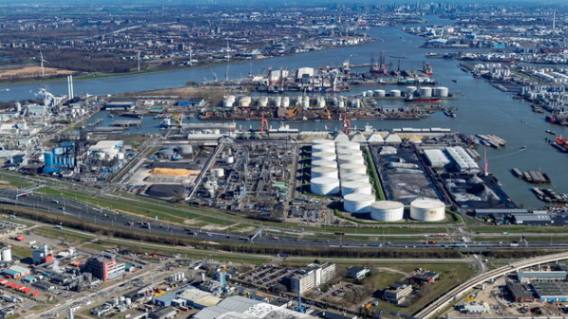
Rotterdam port throughput rises 0.9% to 323.2 million tonnes in first nine months of 2026
Growth driven by coal, crude oil and mineral oil products, while container tonnage and several other cargo segments declined
Total cargo throughput at the Port of Rotterdam increased by 0.9% in the first nine months of 2026 compared with the same period last year, reaching 323.2 million tonnes.
The increase was primarily driven by higher volumes of coal, other dry bulk, crude oil and mineral oil products. However, throughput declined in several segments, including iron ore and scrap, agribulk, liquefied natural gas (LNG), other liquid bulk, containers measured in tonnes, and breakbulk.
Dry bulk volumes increase 2.1%
Dry bulk throughput rose by 2.1% during the period, supported by a 15.3% increase in coal and a 15% rise in other dry bulk cargo.
Coal volumes recovered from the exceptionally low levels recorded in 2025, particularly for coking coal used in European steel production. Demand for thermal coal also increased amid relatively high gas prices linked to geopolitical tensions in the Middle East. Additional electricity generation at Dutch coal-fired power plants, partly to compensate for maintenance at power plants in neighbouring countries, further supported volumes.
In contrast, throughput of iron ore and scrap fell by 5.9%, despite a 6% increase in German steel production. Low water levels on European rivers disrupted supply chains, raising transport costs and restricting the availability of raw materials. Steelmakers consequently relied more heavily on existing stocks, while lower scrap availability reduced export volumes through Rotterdam.
Agribulk throughput declined by 11.4% following stockpiling in 2025, which reduced import demand during the first nine months of this year.
Other dry bulk volumes increased by 15%, reflecting stronger demand for construction materials. Investment in housing, energy infrastructure and railway projects in the Netherlands and Germany points to a gradual recovery in the construction sector.
Liquid bulk benefits from higher oil flows
Liquid bulk throughput increased by 3.1% in the first nine months of 2026, with crude oil volumes rising by 2.1%.
The closure of the Strait of Hormuz disrupted oil product imports from the Middle East, prompting European refineries to import and process more crude oil. This shift also contributed to an 11.1% increase in mineral oil product throughput.
Exports of oil products rose sharply by 31.9%, while imports declined by 6.9%.
LNG throughput remained broadly stable, edging down by 0.2%. Other liquid bulk volumes fell by 3.8%, despite growth in imports of biofuels and the raw materials used to produce them.
The increase in biofuel demand followed the discontinuation of double-counting arrangements in the Netherlands and Germany, requiring suppliers to place greater physical volumes of biofuels on the market. However, this growth was insufficient to offset declining chemical product volumes.
The chemical industry continued to face difficult market conditions, with production in the Netherlands, Belgium and Germany falling in the first nine months of 2026 compared with the same period in 2025.
Container throughput remains stable in TEU terms
Container throughput measured in twenty-foot equivalent units (TEU) increased marginally by 0.1% year on year. However, throughput measured by weight fell by 2.2%.
Hinterland container volumes grew by 7.2%, driven mainly by an 8.9% increase in imports of full containers. Exports of full containers rose by a more modest 1%, marking a return to growth after a period of contraction.
Imports outpaced exports, leading to a continued increase in the number of empty containers transported.
Transhipment volumes, meanwhile, declined by 20%. Long-standing capacity constraints at Rotterdam’s deep-sea terminals have encouraged more cargo to move through other ports, freeing up capacity for hinterland traffic.
Breakbulk volumes fall amid industrial weakness
Breakbulk throughput decreased by 1.4% during the first nine months of 2026.
Roll-on/roll-off (RoRo) volumes recorded a slight increase of 0.7%, while other breakbulk cargo fell by 10.2%.
The decline in other breakbulk was attributed to prolonged stagnation in European manufacturing, particularly in the machinery and automotive industries. Weak economic performance in the United Kingdom continued to weigh on RoRo-related volumes.
Despite the overall increase in cargo throughput, Rotterdam’s performance reflected diverging trends across its main freight segments, with stronger energy-related flows and construction demand offsetting weakness in industrial cargo and container transhipment.
Boudewijn Siemons, CEO of Port of Rotterdam Authority: “The throughput figures show that the port of Rotterdam is continually adapting itself to changing circumstances. Although low water levels, shifting energy flows and pressure on European industry have impacted various markets, we are seeing growth in major freight flows to and from the European hinterland. At the same time, we are noticing how important strong hinterland connections are for Europe’s security of supply and competitiveness. For this reason, it is important that we continue to invest in future-proof road, waterway and rail networks. Reliable infrastructure is the basis for economic growth and a resilient supply chain.”

